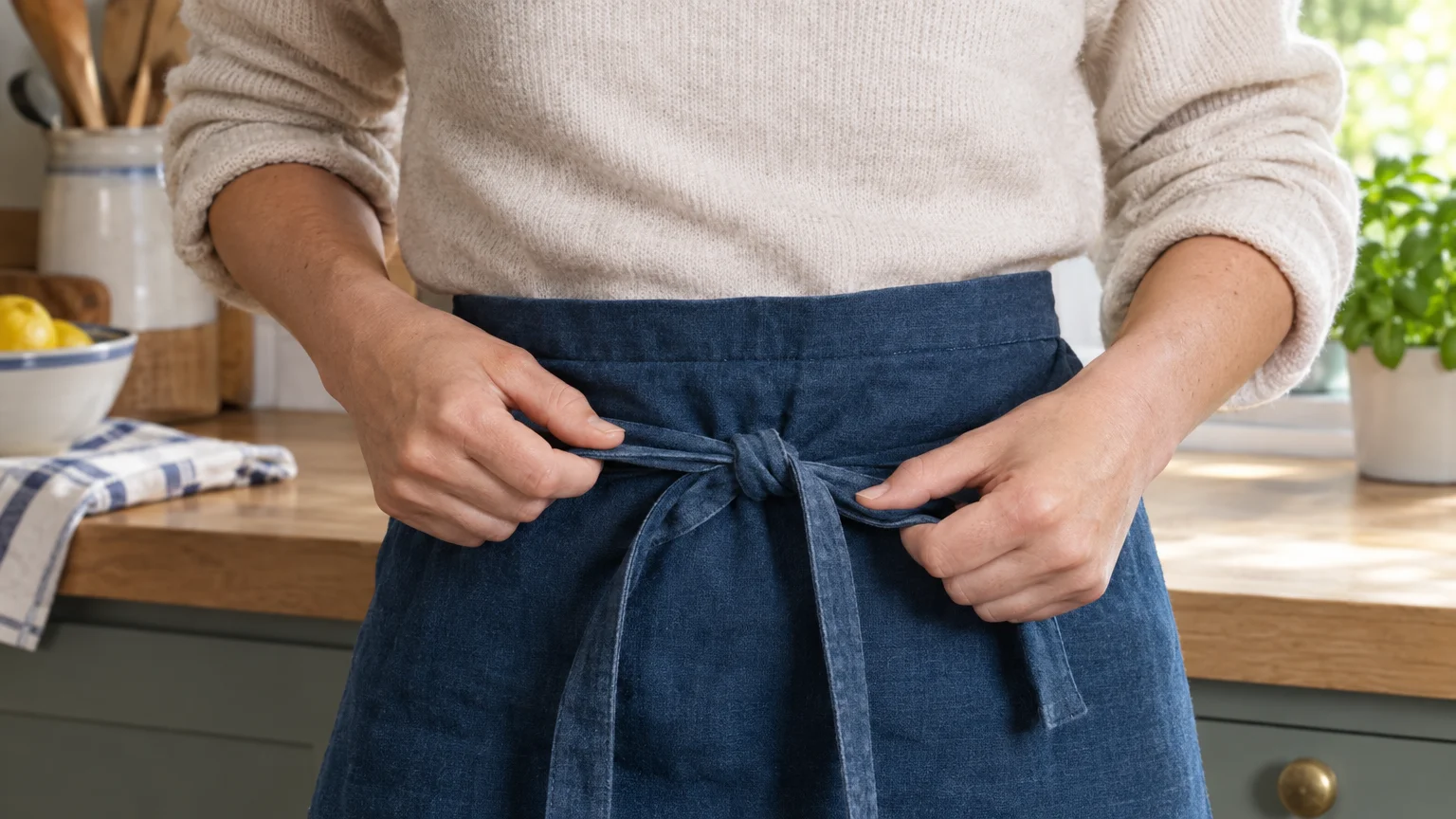
Why do I gain weight around my middle?
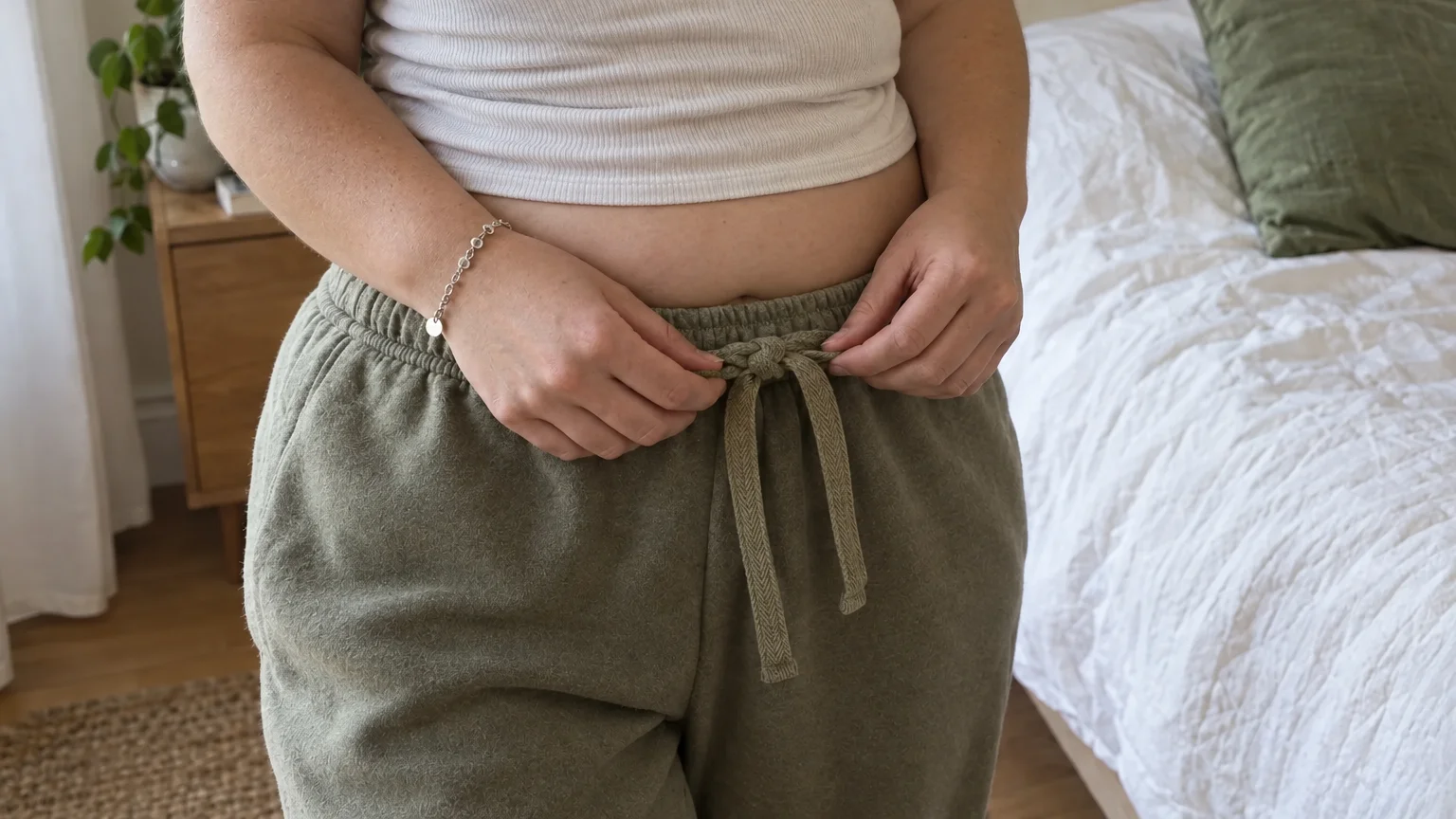

You gain weight around your middle partly because of your genes, your sex and your age, which you can’t change. What you can change is how much fat you carry overall, and that is what shrinks the middle: regular exercise of almost any kind lowers the fat deep inside the belly, while there is no evidence crunches pick where it comes from. Here is why it happens, which belly fat matters and the waist reading worth acting on.
Why do I gain weight around my middle and not elsewhere?
Where fat goes is partly written in your genes. A genetic study of about 695,000 people found hundreds of regions of DNA linked to where the body stores fat, and their effect was stronger in women than in men. That is why two people of the same weight can carry it so differently, one on the hips and thighs and one on the tummy, the shape often called an apple shape.
Belly fat comes in two kinds. Some sits just under the skin, the part you can pinch. The rest sits deeper, packed around the liver, the gut and the other organs inside the belly (visceral fat), and you can’t pinch it at all.
Why does it change with age and the menopause?
Age does most of it. In research covering more than a million women, waists after the menopause were about 4.6 cm larger on average and leg fat was lower, yet the gain in fat itself tracked growing older, with the menopause adding nothing significant on top. So the middle age spread happens to men too. What the menopause seems to change is where fat sits, moving some of it from the legs to the middle, more than how much there is.
Take a woman of 48 who is 165 cm tall. Her weight has held steady for years, but her jeans are tighter at the waist. Half her height is 82.5 cm. If her waist was 80 cm at 44 and has grown by the average 4.6 cm, it is now 84.6 cm: over half her height, with nothing on the scales to warn her.
Which kind of belly fat matters for health?
The deep fat matters most. Research following people over many years found that a waist which grew over the years went with more deaths from heart disease. The tape is the easiest way to follow it at home, because a scan is the only way to see visceral fat directly.
Measure at the midpoint between your ribs and your hip bone. Keep your waist to less than half your height. Breathe out normally, keep the tape level and measure twice. If the second reading is still over half your height, act on it. A waist that has grown while your weight has stayed the same is worth acting on in the same way as weight gain. There is more on the numbers for women in what a healthy waist size is for a woman.
Recommended watch
Why isn’t your belly fat shifting
A short explainer on the two kinds of belly fat: visceral fat, which sits around the organs and is linked to type 2 diabetes and heart disease, and subcutaneous fat, the bit you can pinch. It also covers which kinds of exercise a large analysis of trials found worked best for losing both.
Do crunches, cortisol cures and belly fat teas work?
Crunches and sit-ups for belly fat: no evidence they burn it. They strengthen the muscles under the fat, but the exercise that lowers belly fat in trials is whole body exercise, done regularly. Someone doing fifty sit-ups every morning and seeing no change in the mirror isn’t doing them wrong. There is no evidence sit-ups choose where fat comes off.
Belly fat teas and cortisol cures: skip them. Nothing shows they shift fat from the middle, and the money is better spent on a pair of walking shoes.
What helps, and when should you act?
Regular exercise lowers the deep fat, whatever kind you choose. In trials of about 4,800 people with overweight, walking type exercise, strength work and a mix of the two all reduced visceral fat, though strength work alone did the least and did not help women with higher body fat. In healthy adults, strength training on its own did lower visceral fat. For women after the menopause, trials involving about 5,700 women found exercise shrank both the waist and the deep fat. So walking is the base and strength work is a useful addition. Is walking enough exercise? sets out how much counts.
Losing the deep fat seems to leave a lasting mark. A study followed 366 adults for five and ten years after an 18 month diet and exercise programme, and their waists and belly fat stayed partly lower even after the weight came back. Losing more of the deep fat may also lower the later risk of type 2 diabetes, so the effort counts even if some weight returns.
Sources
- Overweight and obesity in adults
- Ambikairajah et al. Fat mass changes during menopause: a metaanalysis. American Journal of Obstetrics and Gynecology, 2019.
- Pulit et al. Meta-analysis of genome-wide association studies for body fat distribution in 694 649 individuals of European ancestry. Human Molecular Genetics, 2019.
- Klein et al. Lifestyle-Induced Visceral Fat Loss as a Key Target for Durable Cardiometabolic Health: MRI-Assessed 5- and 10-Year Follow-Up After 2 Clinical Trials. Circulation, 2026.
- Chen et al. Effects of various exercise types on visceral adipose tissue in individuals with overweight and obesity: A systematic review and network meta-analysis of 84 randomized controlled trials. Obesity Reviews, 2024.
- Wewege et al. The Effect of Resistance Training in Healthy Adults on Body Fat Percentage, Fat Mass and Visceral Fat: A Systematic Review and Meta-Analysis. Sports Medicine, 2022.
- Wang et al. Associations of obesity indices change with cardiovascular outcomes: a dose-response meta-analysis. International Journal of Obesity, 2024.
- Khalafi et al. The effects of exercise training on body composition in postmenopausal women: a systematic review and meta-analysis. Frontiers in Endocrinology, 2023.