Tirzepatide and the pill: contraception and pregnancy

What the MHRA, the NHS and the patient leaflet say about tirzepatide, the contraceptive pill, pregnancy and breastfeeding.

In this article
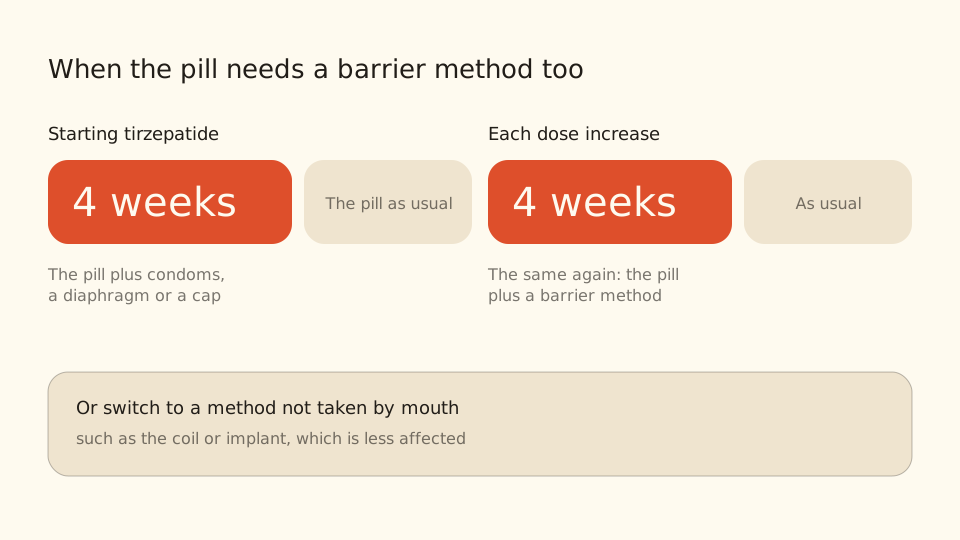
Tirzepatide and the contraceptive pill need planning together. The MHRA says tirzepatide may make oral contraceptives less effective in people living with overweight or obesity. If you take the pill, add a barrier method, such as condoms, for 4 weeks after starting and for 4 weeks after any dose increase. You could instead switch to a method that is not taken by mouth, such as the coil or implant.
Does tirzepatide affect the contraceptive pill?
It can. The MHRA’s guidance says GLP-1 medicines, a group that includes tirzepatide, may reduce how well oral contraceptives work in people living with overweight or obesity. The patient leaflet gives the same advice: consider a barrier method, or a method not taken by mouth, for 4 weeks after starting and for 4 weeks after each increase in dose.
Barrier options for those 4-week windows include condoms, a diaphragm or a cap. Methods that are not taken by mouth, such as the coil or implant, are less affected.
Not every method works straight away, so check with a healthcare professional, or read the leaflet for your method, to make sure you are covered. The full MHRA guidance has a table of how long to stop each medicine before pregnancy.
When should I stop tirzepatide before trying for a baby?
Tirzepatide is not used in pregnancy, because there is not enough information to say it is safe for a baby. The MHRA advises stopping it at least 1 month before trying to get pregnant, and the NHS says at least 4 weeks. If you think you might be pregnant while using it, speak to a healthcare professional straight away.
The MHRA says GLP-1 medicines should not be taken while breastfeeding. If you are breastfeeding or planning to, talk to your prescriber before using tirzepatide.
Tell your prescriber, and the anaesthetist, if you are due to have an operation, because these medicines slow how quickly your stomach empties.
Where can I get advice or report a problem?
Speak to your prescriber, a pharmacist or a sexual health clinic about which contraception suits you while you use tirzepatide. If you have side effects that bother you or do not go away, a pharmacist can advise you.
If you think you have had a side effect, report it to the Yellow Card scheme, run by the MHRA. Reports help the MHRA spot new safety issues early.
If you want to talk through tirzepatide alongside other ways of managing your weight, your GP is a good place to start. A private prescriber can go through your options with you too. The NHS guide to overweight and obesity sets out the options, from lifestyle programmes to other medicines and surgery.