Why has my weight loss stopped? Understanding a plateau

Why the scale often stalls after a few months, what is happening in your body, and practical ways to move through a weight loss plateau.

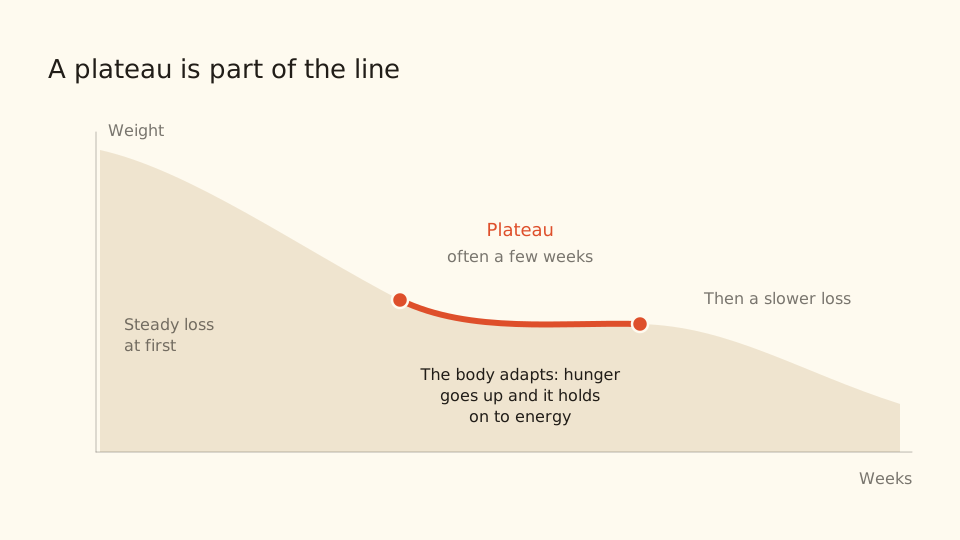
A weight loss plateau is when the scale stops moving for a few weeks even though you are doing what worked before. It is common, and it has a physical cause: as you lose weight, your body adapts by holding on to energy and turning up hunger signals, often called metabolic adaptation. Many people meet one, and it is a signal to adjust the plan to the lighter body you have now.
Why has my weight loss stopped?
Your body treats its fat stores as something to defend. Researchers describe a set of responses, called adaptive thermogenesis, in which metabolism, behaviour and hormones shift to resist further loss once weight has come off. Much of this runs through leptin, a hormone made by fat cells.
Appetite changes too. A review in the International Journal of Obesity describes how, after weight loss through dieting, levels of ghrelin, a hormone that drives hunger, go up, while several hormones that help you feel full go down. The same portions can leave you hungrier than they used to.
Weight loss comes from eating and drinking fewer calories than your body uses. As your body adapts, that gap can narrow without you changing anything at all.
Is a weight loss plateau normal?
Yes. Weight rarely falls in a straight line. The NHS suggests aiming for a steady loss of 1 to 2lbs, or 0.5 to 1kg, a week. Over months, that average will include some weeks where the scale barely moves and others where it drops more.
Weighing yourself regularly helps you check how you are getting on. Look at the trend across several weeks rather than a single morning.
Look at what else has changed, too. The BDA suggests counting wins that the scale does not show, such as sleeping better, climbing the stairs without getting out of breath, or feeling less pain. Losing even 5 to 10% of your body weight can improve your health, according to the NHS guide to overweight and obesity.
How do I break a weight loss plateau?
If your weight loss stalled after a good start, begin by checking the basics, because small habits drift. The BDA suggests tracking what you eat with a diary, photos or an app, which helps you notice portions creeping up and often leads to steadier weight loss.
- Serve slightly smaller portions of everything except vegetables.
- Put some protein in every meal, because it can help you feel full for longer.
- Fill about half your plate with vegetables, which are high in fibre and low in calories.
- Check your drinks: alcohol is high in calories and can make you feel hungrier.
Move a little more and add strength work. Strength activities on at least two days a week are part of the UK guidance, and NHS Better Health says moving more can help you keep weight off.
Sleep counts as well. Poor sleep can make it harder to lose weight, partly by making high-calorie food more tempting. The BDA’s weight loss fact sheet has a goal-setting plan if you want to start again with fresh targets.
How can I keep weight off after a plateau?
Keeping weight off asks for the same habits that took it off, held for longer. The review in the International Journal of Obesity concludes that people need to keep up behaviours that counteract the body’s adaptations to weight loss.
In practice that means staying active, which NHS Better Health says can help you keep weight off, and weighing yourself regularly to see how you are getting on. Small gains are easier to deal with when you notice them early.
The BDA’s advice is to make lasting, practical changes based on the Eatwell Guide, and to avoid fad diets, which are extreme, restrictive and hard to stick with. A plateau is a good moment to ask which of your changes you could keep for years and which were only ever going to be temporary.
“Weight rarely falls in a straight line.”
When should I speak to a GP?
The NHS suggests seeing a GP if you want help to lose weight. It also suggests a GP if you have a condition such as pre-diabetes, high blood pressure or sleep apnoea. A GP can refer you to weight management programmes and specialist services, if you meet the criteria, however in for those who may not meet the criteria, private options are available.
If eating feels out of control, or you think you may have an eating disorder such as binge eating, mention that to your clinician too.
For the support the NHS offers, see what weight loss support can I get on the NHS?. For meals that keep you full, read how much protein do I need a day?, and for strength ideas, movement, on your terms.
Sources
- Overweight and obesity
- Adaptive thermogenesis in humans (Rosenbaum and Leibel)
- Physiological adaptations to weight loss and factors favouring weight regain (Greenway)
- Weight loss: food fact sheet
- Lose weight
- UK Chief Medical Officers’ physical activity guidelines
- Healthy eating when trying to lose weight