What weight loss support can I get on the NHS?

The free tools, local programmes and specialist services the NHS offers for weight, who each is for, and how to ask for help.

In this article
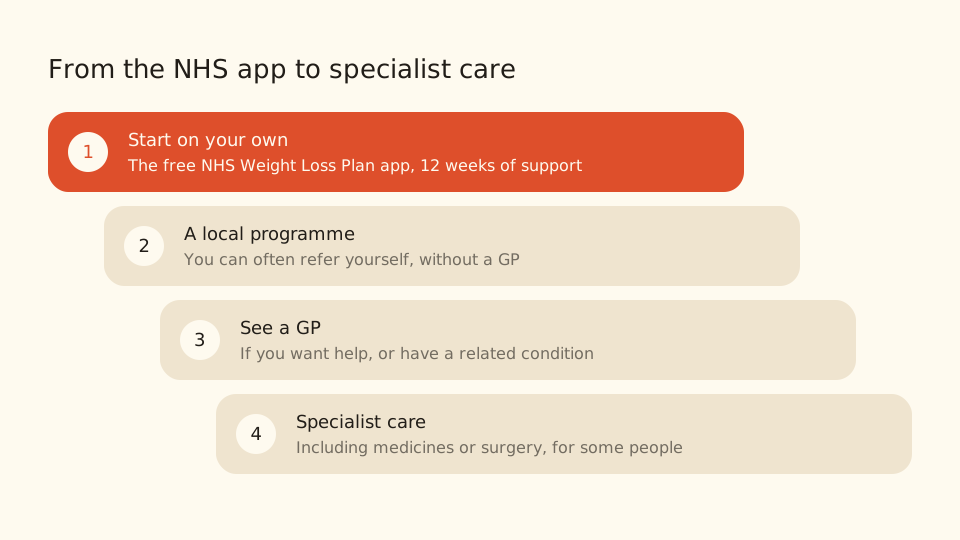
Weight loss support on the NHS runs from free tools you can start today to specialist services a GP can refer you to. The NHS Weight Loss Plan app is free and gives 12 weeks of advice and support. Many areas run programmes you can join yourself, and a GP can refer you to more specialist help, including medicines or surgery for some people.
What NHS weight loss support can I start on my own?
The NHS Weight Loss Plan app gives advice and support over 12 weeks: you set a goal, track what you eat and drink, and get a daily calorie target. More than 4 million people have downloaded it.
NHS Better Health also has free home workout videos and the Couch to 5K running plan, which builds you up to running 5km over 9 weeks. Its Healthy Choices Quiz asks about areas such as eating, activity and sleep, then gives you a score and personalised advice. You can find all of it on the NHS Better Health weight pages.
If you have a medical condition, a special diet for your health, or an eating disorder now or in the past, talk to a GP or a healthcare professional before you change how you eat.
Can I refer myself to an NHS weight management programme?
Often, yes. The NHS says you may be able to refer yourself to local weight loss services without seeing a GP. To find out what runs near you, check your GP surgery’s website, look on your integrated care board’s website, or search online for NHS weight management services in your area.
Programmes vary, but they can include one-to-one coaching, cognitive behavioural therapy, group support, online exercise classes and healthy eating advice.
If you have a condition affected by your weight, such as high blood pressure or type 2 diabetes, you may be offered more specialist support, such as the NHS digital weight management programme. The NHS guide to overweight and obesity explains each route.
When will a GP refer me to specialist help?
The NHS suggests seeing a GP if your BMI is in the overweight or obese range and you want help to lose weight, or if your waist is more than half your height. The same applies if you have a condition such as pre-diabetes, high blood pressure, joint pain or sleep apnoea. A GP can refer you to a specialist weight management service if you need more support.
For most adults, a BMI of 25 to 29.9 is overweight and 30 or more is obese. If you are from a South Asian, Chinese, other Asian, Middle Eastern, Black African or African-Caribbean background, health risks start at a lower BMI, so the thresholds are 23 and 27.5.
What should I ask my GP about my weight?
It helps to go in with a clear question, such as which local programmes you can join, or whether you might need specialist support. A GP can also look at anything that might be making it harder to manage your weight.
The NHS lists several of these: some medicines, including some steroids, antidepressants and beta blockers; conditions such as an underactive thyroid; and the menopause or perimenopause. Mental health matters here too, and a GP can help you get support for it.
You can also say which words you prefer. NICE asks clinicians to find out a person’s own preferred terms for talking about weight, and to use language that does not stigmatise.
Who can have medicines or surgery on the NHS?
Some people are offered medicines alongside support with diet and activity, depending on their BMI and any health conditions affected by their weight. NHS Better Health notes that on the NHS these are suitable only for some people, and that the criteria differ from one medicine to another.
Weight loss surgery may be offered if you have a BMI of 40 or over, or 35 or over with a condition that could improve with weight loss, such as type 2 diabetes. Often the criteria require multiple associated conditions. Lower thresholds of 37.5 and 32.5 apply for people from the backgrounds listed above. After surgery, you have regular check-ups for 2 years.
For everyday changes that help on any of these routes, read how much protein do I need a day?, movement, on your terms and why has my weight loss stopped?.