Small rituals, everyday moments
Why small, repeated habits tend to stick when big plans fade, and how to build a few that support your health without taking over your day.

In this article
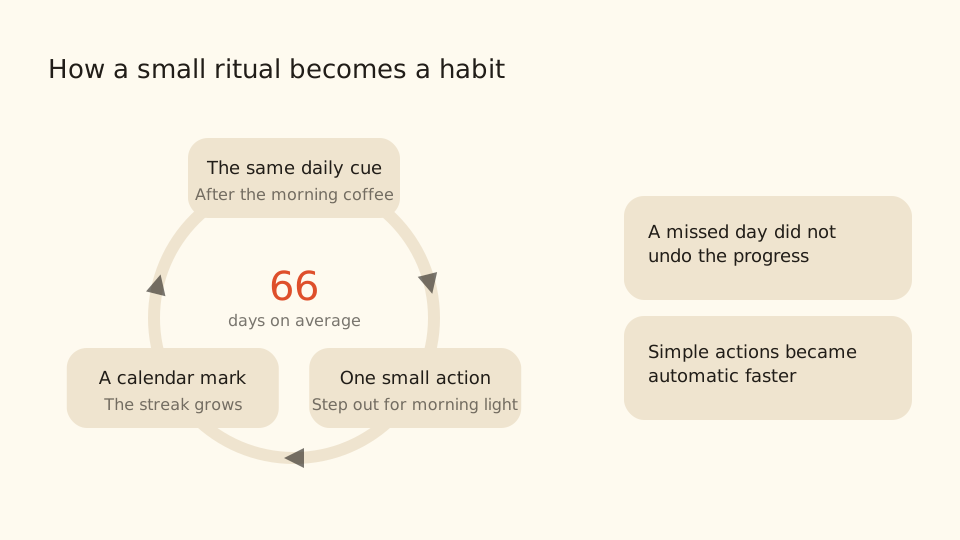
Small daily rituals are easier to keep than big resolutions because they ride on things you already do. In habit research, people who repeated one simple action after the same daily cue, such as breakfast, found it felt more automatic over time, levelling off after an average of 66 days. Missing the odd day did not reset the clock.
How long does it take to form a habit?
The figure most often quoted comes from a study described in the British Journal of General Practice. Volunteers chose one healthy behaviour, such as eating a piece of fruit or going for a walk, and did it each day after the same cue. They rated every day how automatic it felt. The rise was quick at first and then slowed, reaching a plateau after 66 days on average.
Two findings make this more encouraging than it sounds. Missing an occasional day did not seriously set people back, and the gains resumed afterwards. Simple actions, like drinking water, became automatic faster than more involved ones.
So the first rituals worth choosing are small. Something you can do in a minute or two is easier to repeat on a bad day than something that needs an hour. In the study, it was repetition after the same cue that built the habit.
How do I link a new habit to my day?
The authors suggest tying a new behaviour to a cue that already happens each day, and repeating it in the same situation. Some people call this habit stacking. In practice it looks like a sentence you can say to yourself: after I put the kettle on, I fill a glass of water; after I get home from work, I change into my trainers.
The British Dietetic Association suggests starting with two or three small changes and writing an action plan with clear goals, then building on them as each one settles. If a goal feels too hard, change it to one you feel more confident about. Its weight loss fact sheet has a worked example of an action plan.
- One cue you already have, such as the morning kettle.
- One small action that follows it.
- A mark on a calendar, so you can see the run building.
“After I get home from work, I change into my trainers.”
Which small rituals are worth starting with?
Start with simple ones, because simple actions become automatic faster. Each of these fits into an ordinary day and has a clear cue:
- A glass of water while the morning kettle boils; the NHS advises 6 to 8 cups or glasses of fluid a day.
- A brisk 10-minute walk after lunch, which counts towards your weekly activity.
- A piece of fruit with breakfast, towards your 5 A Day.
- Three good things written down before bed.
Choose one, tie it to its cue, and give it a few weeks before you add the next. The study’s 66 days was an average, so yours may settle sooner or take longer. Keeping a simple record helps you see the run building. On days when the habit still feels like effort, that run is a reason to keep going.
Can slowing down at meals help?
Meals are a natural place for a ritual because they come round several times a day. The BDA suggests eating slowly and avoiding distractions such as the TV, to help you avoid eating more than you need.
Mindful eating is one way in, and mindfulness more broadly. The NHS describes it as paying attention to the present moment, including the sights, sounds, smells and tastes around you. It suggests picking a regular time to notice things, such as the morning journey to work or a walk at lunchtime. The NHS guide to mindfulness has more ideas.
You could start with the first few mouthfuls of one meal a day. Put your fork down between bites, notice the taste, and check halfway through how hungry you still feel. A cup of tea drunk sitting down works the same way.
What if a ritual stops working?
Life changes, and a habit that fitted last month may not fit this one. The BDA calls the occasional slip normal and suggests getting straight back on track rather than starting over. The habit research points the same way: a missed day barely dented people’s progress.
Look for the cue that disappeared. A ritual tied to the commute fades when you work from home; tie it to your first coffee instead and carry on. Finding a rhythm that feels like you looks at the same idea from the other side, starting with what you enjoy.
Ending the day on what went well is a ritual in its own right. The NHS suggests writing down three things that went well, or that you are grateful for, at the end of each day. For more on evenings, see a gentler end to the day, and for a morning version, making space for a slower morning.