How often should I weigh myself when losing weight?

What research says about weighing yourself, why the number moves between days, and how to choose a routine you can live with.

In this article
How often should I weigh myself? The research does not settle on one number. A review of 17 studies found that regular weighing, daily or weekly, was linked with more weight loss, and the frequency varied between studies. Choose a routine you can keep, and read each weigh-in as one point in a pattern.
Does weighing myself help me lose weight?
Regular weighing is linked with weight loss in the research, and the same review found no link with depression or anxiety. That is an association, so it does not prove the scales caused the loss.
One small trial followed 47 adults who were asked to weigh daily for six months. About half did, and they lost 6.1 kg more on average than those who weighed less often, though even that group weighed on 5.4 days a week. The daily weighers also took up more weight control habits. With so few people, and with people choosing how often to weigh, treat it as a pointer rather than a rule.
Why does my weight change from day to day?
Daily weight follows a weekly rhythm. In a study of 80 adults and 4,657 weigh-ins, weight was higher early in the week, on Sunday and Monday, and fell through the week. It started to rise on Saturday and to fall from Tuesday.
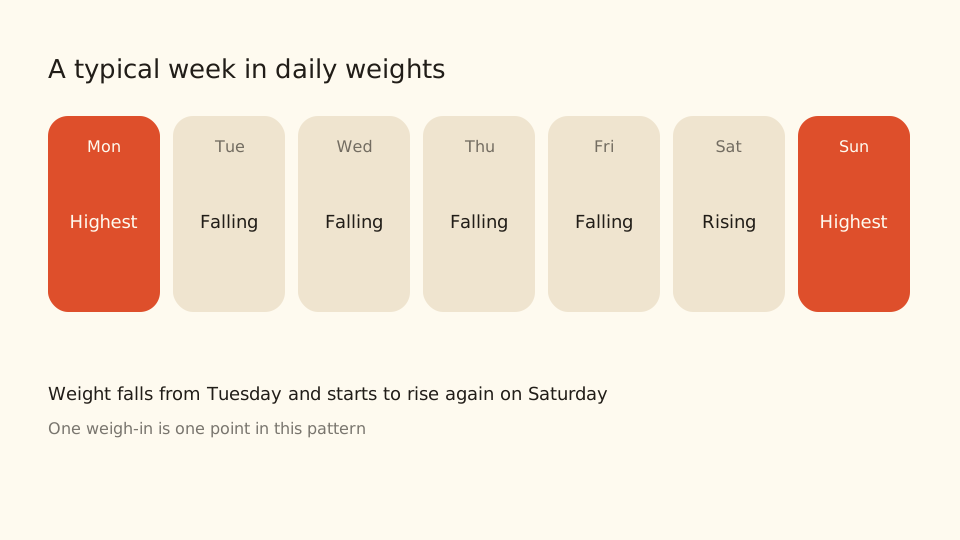
“Weight changes between the weekend and the weekdays should be seen as normal.”
The study’s authors say these variations are normal rather than signs of weight gain. The people who compensated most during the week were the ones most likely to lose or maintain weight, and long-term habits may matter more than short-term splurges. If a weigh-in looks high after a weekend, check the trend before you worry. If the trend has stalled, why has my weight loss stopped is the next thing to read.
How often should I weigh myself?
There is no single right answer, so pick the option that suits how you feel about the scales:
- Weigh once a week, on the same day, on the same scales, at about the same time.
- Weigh daily and look at the average for the week rather than any single day.
- Weigh less often, and use how your clothes fit, your energy and how far you can walk as other signs.
Using the same scales at the same time of day takes some of the noise out of the number, so a change is easier to trust. Writing the weight down, on paper or in an app, lets you see the pattern across weeks and not one morning.
How do I make weighing less stressful?
Tie the weigh-in to something you already do, as in small daily rituals, so it becomes part of the week and not an event. Decide in advance what you will do with the number, even if the answer is nothing. A reading that is higher than expected is information about one day, and the weekly rhythm above shows why it can be.