How much fibre a day do you need in the UK?
The daily fibre guideline for UK adults, what a day of ordinary meals adds up to, and how to add more without discomfort.

In this article
How much fibre a day do you need? Government guidelines say adults should aim for 30g a day, as part of a healthy balanced diet. Most adults eat about 20g. Three ordinary meals can get you to 30g: the NHS gives example main meals that add up to about that, before any snacks.
How much fibre should an adult eat a day?
The British Dietetic Association puts the figure at around 30g of dietary fibre a day for general health benefits, and says the average UK adult eats 18g, about 60% of what is recommended. The NHS links eating plenty of fibre with a lower risk of heart disease, stroke, type 2 diabetes and bowel cancer, and says it helps digestion.
A series of reviews in The Lancet found that, in observational studies, the highest fibre eaters had a 15 to 30% lower risk of death from any cause and of several conditions, among them heart disease and type 2 diabetes, than the lowest. The risk reduction was greatest at 25g to 29g a day. Trials found lower body weight, blood pressure and cholesterol on higher fibre intakes.
How do I get to 30g without a supplement?
The NHS gives example meals that show how it adds up. Two slices of wholemeal toast with peanut butter and a medium orange give around 8.3g. Wholemeal spaghetti with a lentil and tomato sauce gives around 11g. Grilled chicken with a skin-on baked potato, carrots and green beans gives around 11.2g.
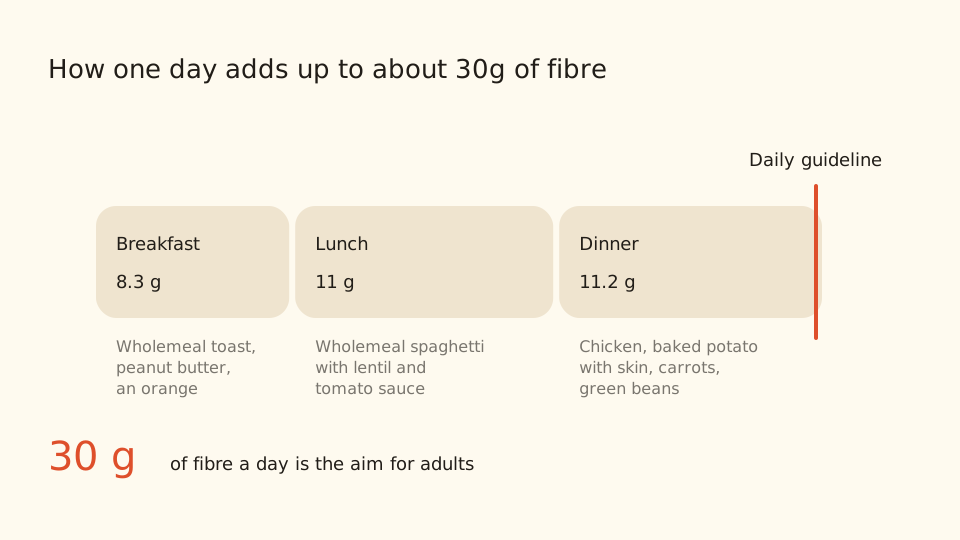
“Three ordinary meals can get you to 30g a day.”
Swaps the NHS suggests:
- Porridge, plain wholewheat biscuits or plain shredded whole grain for breakfast.
- Wholemeal or granary bread, and wholewheat pasta, bulgur wheat or brown rice.
- Potatoes with their skins on, such as a baked potato.
- Beans, lentils or chickpeas in stews, curries and salads.
- Unsalted nuts, fruit, vegetable sticks or oatcakes as snacks.
Seasonal vegetables are an easy way to vary the plate, and eating with the seasons has ideas.
How do I read a food label for fibre?
Most packaged foods have a nutrition label that can show how much dietary fibre the food contains. Check the grams per serving or per 100g. The 100g figure lets you compare two similar products fairly, whatever the pack size. A food counts as a source of fibre at 3g or more per 100g, and as high in fibre at 6g or more per 100g. A bowl of porridge, a slice or two of wholemeal bread or a tin of beans would be worth checking first, because the amount varies with how a food is made and prepared.
What should I watch for when I add more?
Increase your fibre gradually, which gives your gut time to adjust and avoids symptoms such as bloating and gas. Drink plenty of fluid as you go, because fibre draws water into the bowel. If you have a condition such as irritable bowel syndrome, larger amounts of fermentable fibre can cause bloating, gas and diarrhoea.