Healthy lunch ideas for work that keep you full

In this article
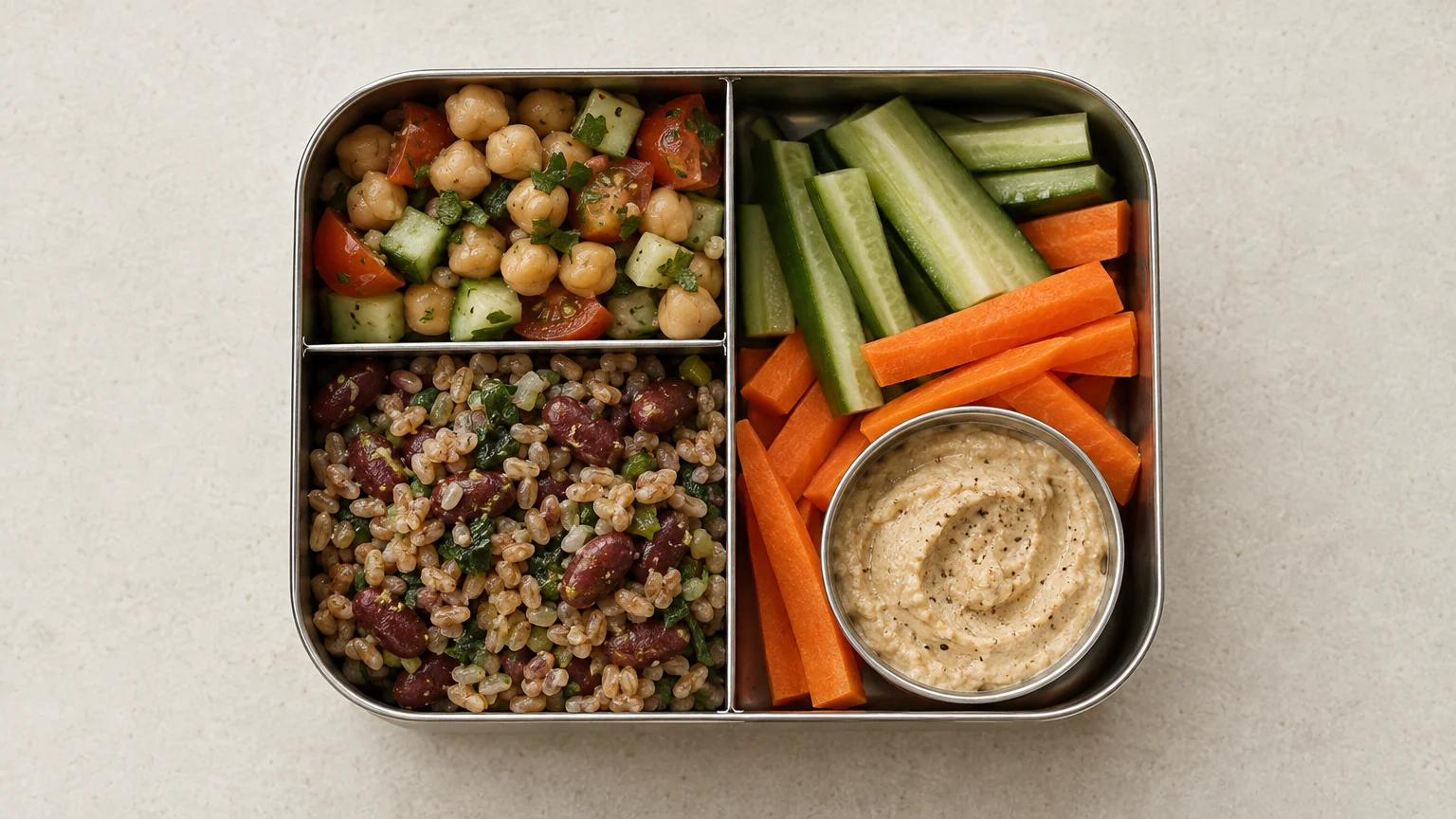
The healthy lunch ideas for work that keep you full share one build: a protein food, plenty of vegetables and a higher fibre starch such as brown rice or wholewheat pasta. Protein reduced hunger after a single meal in studies, and eating more fibre is linked with a lower body weight. Beans and lentils give you fibre and plant protein together, so a lunch built on them covers two parts at once.
What makes a work lunch keep you full?
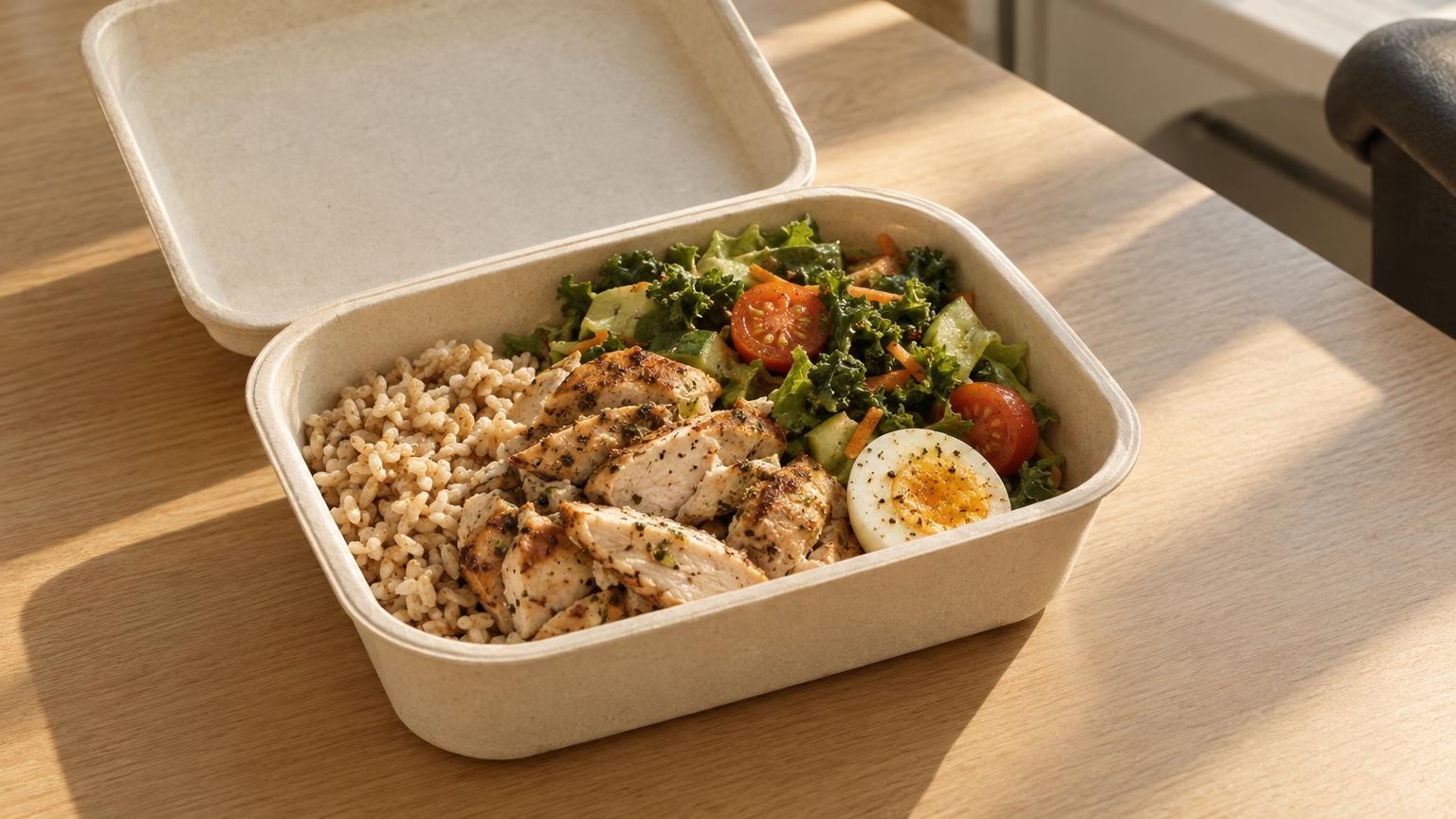
Protein and fibre do most of the work, and the evidence for each is different. In research with healthy adults, a protein-rich meal cut hunger and raised fullness compared with a meal of the same calories. Put simply, you feel a little less hungry after the higher protein meal. The change was small, enough to notice and no more.
Fibre works over a longer stretch. In research with 4,635 adults, eating more fibre was linked with a significantly lower body weight. Those people changed their whole diet, so a higher fibre lunch helps your day along without doing the job on its own. You’ll find daily amounts in how much fibre a day and how much protein you need.
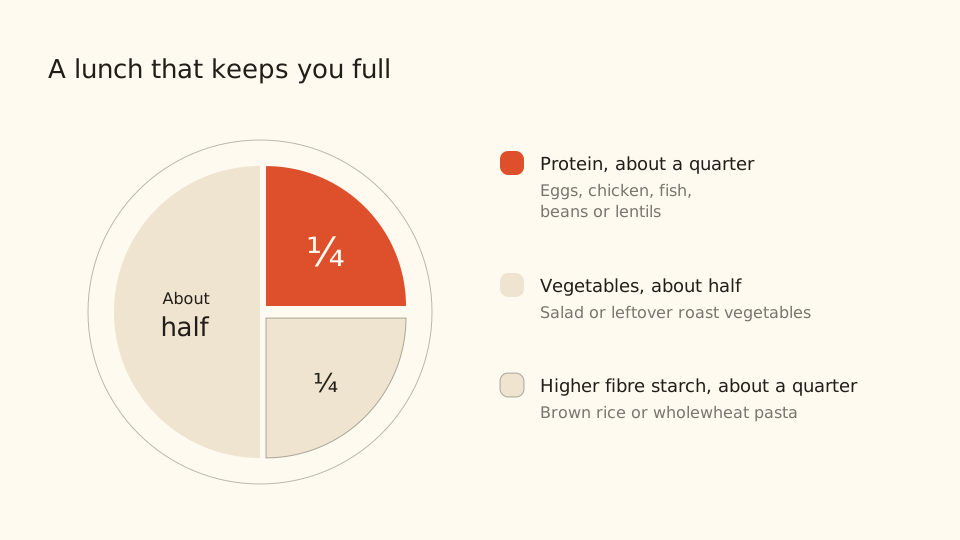
For the starch, pick the higher fibre or wholegrain kind, such as brown rice or wholewheat pasta. Then give vegetables the biggest part of the box. Fruit and vegetables should make up just over a third of what you eat across the day, and lunch is an easy place to get there.
What can I make the night before?
Anything that keeps in the fridge overnight, and beans and lentils keep well. They’re high in fibre and plant protein, and naturally low in salt (sodium) and saturated fat, so one ingredient fills two parts of the build.
Over a working week, it adds up like this. In research with 1,938 adults, people ate about 86 g of beans, lentils or peas a day for at least six weeks. Weigh one 86 g portion on Sunday, see how it looks in the box, and judge the other four by eye. People in that research had lower cholesterol and fasting glucose, and the evidence for that was moderately strong. So eat them for the fibre and protein you get from one ingredient.
A few lunches that keep well overnight:
- Lentils or chickpeas with leftover roast vegetables and brown rice
- Wholewheat pasta with tuna and sweetcorn
- Two boiled eggs, a bean salad and a wholemeal wrap
- Leftover chilli with kidney beans over brown rice
What if I only have a canteen or a shop?
Ask yourself the same three questions at the shelf. Where’s the protein, where are the vegetables, and is the starch the higher fibre kind? A white bread sandwich from a meal deal often answers one. A bean or lentil salad pot, or a wholemeal chicken sandwich with a pot of cherry tomatoes, answers all three.
Pulses have a second reason to be there. In short studies, a meal with pulses gave a lower blood glucose rise than white rice or wheat products, other studies that measured hunger, people were less hungry after the pulse meal. So choosing the lentil soup over the white baguette is a sensible lean, and no more than that.
In a canteen, build it at the counter. Take the protein first and ask for extra vegetables or salad. Then have brown rice or wholewheat pasta if they serve it, and a smaller scoop of the white kind if they don’t. If lunch gets squeezed between meetings, losing weight with a busy job covers the rest of the day.
Is a salad really a good work lunch?
Only once it has protein and a starch in it. A box of leaves and cucumber gets the biggest part of the build right, but it leaves out the two parts tied to hunger and body weight: protein at a single meal, and fibre across your diet. A salad is a good work lunch when it holds a protein food and a higher fibre starch, and a side dish when it does not.
The fix takes a minute. Stir in beans or lentils, or add two eggs or some chicken, and put brown rice or wholewheat pasta underneath.
Before you pack or buy tomorrow’s lunch, look in the box for the protein and the starch first, and only then for the salad.
Sources
- Effects of short- and long-term protein consumption on appetite and appetite-regulating gastrointestinal hormones: systematic review and meta-analysis
- Carbohydrate quality and human health: a series of systematic reviews and meta-analyses
- Legume intakes on cardiometabolic profile and gut microbiome function: systematic review and meta-analyses of randomised controlled trials
- The Eatwell Guide
- Acute Effects of Non-Oil-Seed Pulses on Parameters of Cardiometabolic Health: A Systematic Review of Human Intervention Studies